
Chinese New Year in Bali takes place around late January or mid-February each year. This special holiday is celebrated mostly by Balinese of Chinese descent as well as by most Chinese Indonesians across the nation. Bali’s Chinese cultural influences go way back in history. Fine examples include Balinese temples bearing Chinese architectural features, the use of ancient Chinese coins in rituals, and early settlements in the Kintamani highlands where legend tells of the marriage between a Balinese king and a Chinese princess.
You can visit majestic Chinese and Buddhist temples, called klenteng in the local tongue, all around the island. They’re great places to visit any day of the year but become alive and festive during Chinese New Year celebrations.
Chinese Temples in Bali
Some of the best places that you can freely visit during Chinese New Year in Bali are the few magnificent Chinese temples where Chinese lion and dragon dance troupes parade the streets before performing at the temple grounds.
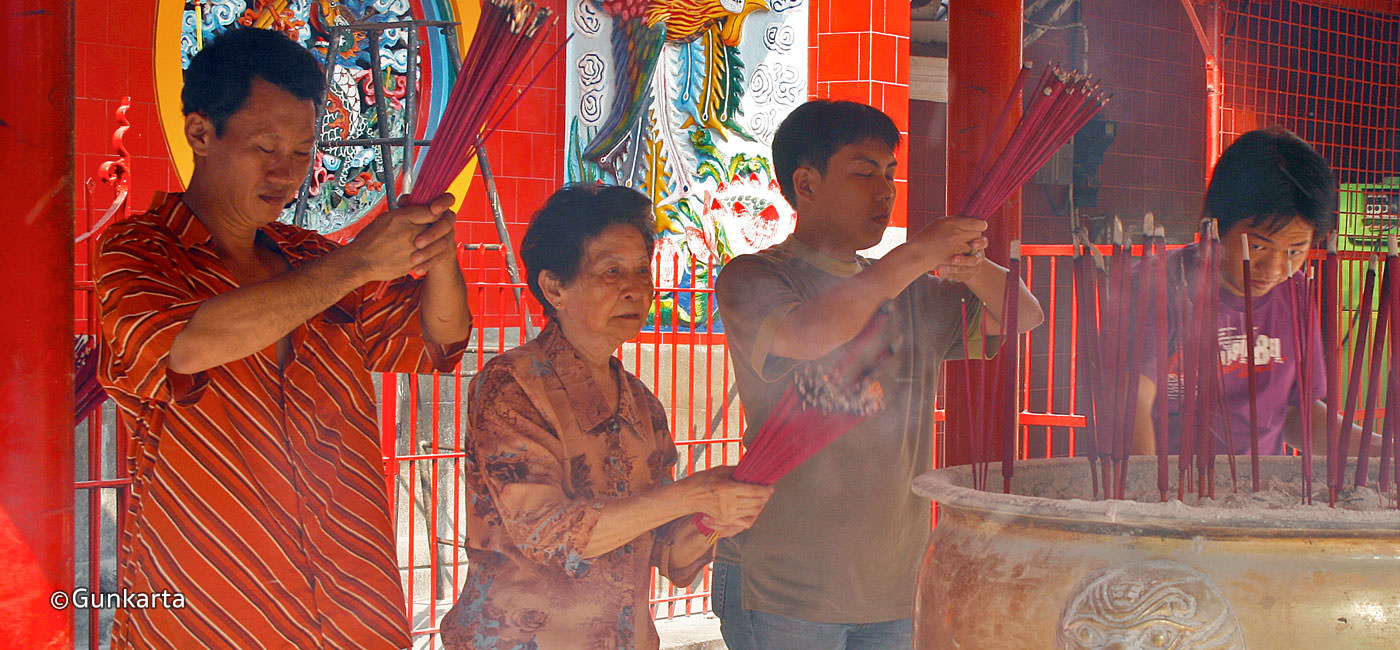
Expect a scene with noisy firecrackers and lots of smoke and sounds of drums in the air, as well as the constant burning of joss paper alongside solemn prayers inside the beautiful temples. Some of these temples are centuries old and are historical landmarks worth visiting on any given day.
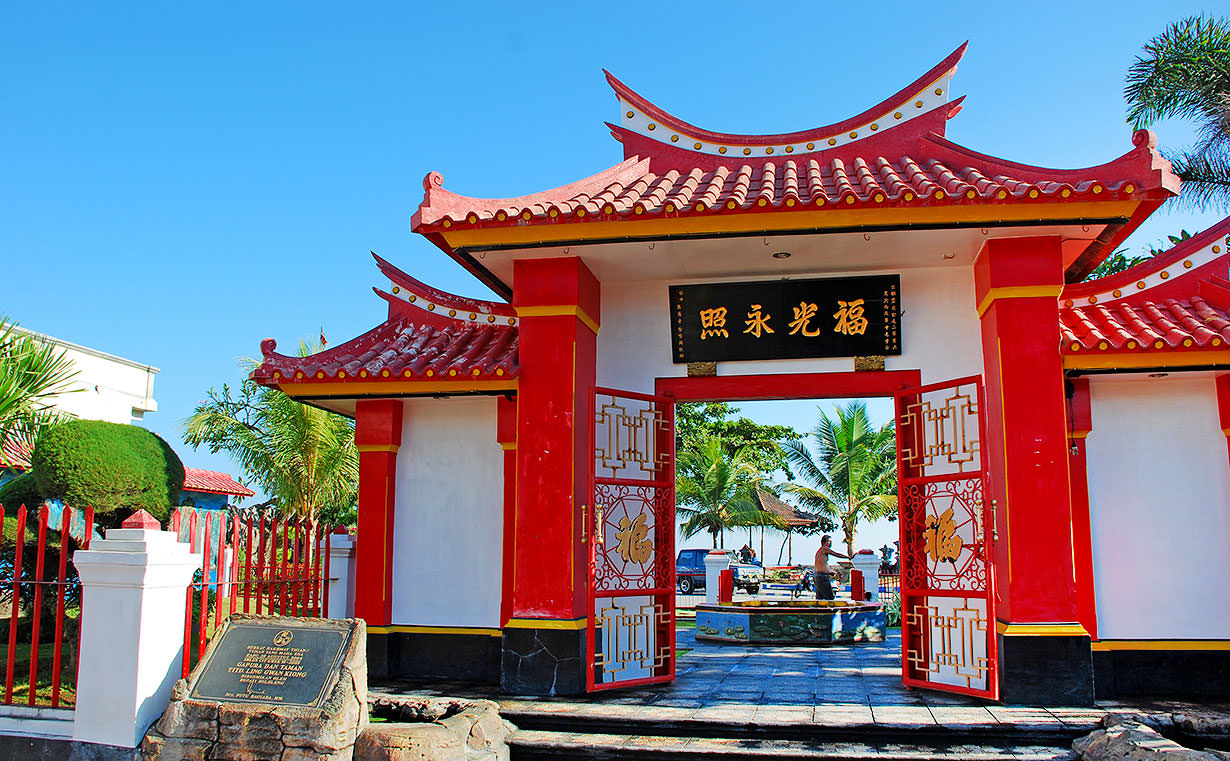
Some of the great Chinese temples in Bali are Ling Gwan Kiong in Singaraja (North Bali), Vihara Dharmayana in Kuta and Caow Eng Bio in Tanjung Benoa.
Ling Gwan Kiong Chinese Temple
An old Chinese temple that overlooks the now-defunct seaport complex in Singaraja
Vihara Dharmayana
One of the very few cultural landmarks that are hidden amid Kuta’s traffic frenzy and ‘surfer’s paradise’ buzz, was one of the various Buddhist sites in Bali
Caow Eng Bio Chinese Temple
Impressive historical and cultural landmark that’s worth a visit while in Tanjung Benoa, referred to simply as Klenteng Tanjung Benoa
 Fly Bali Tours